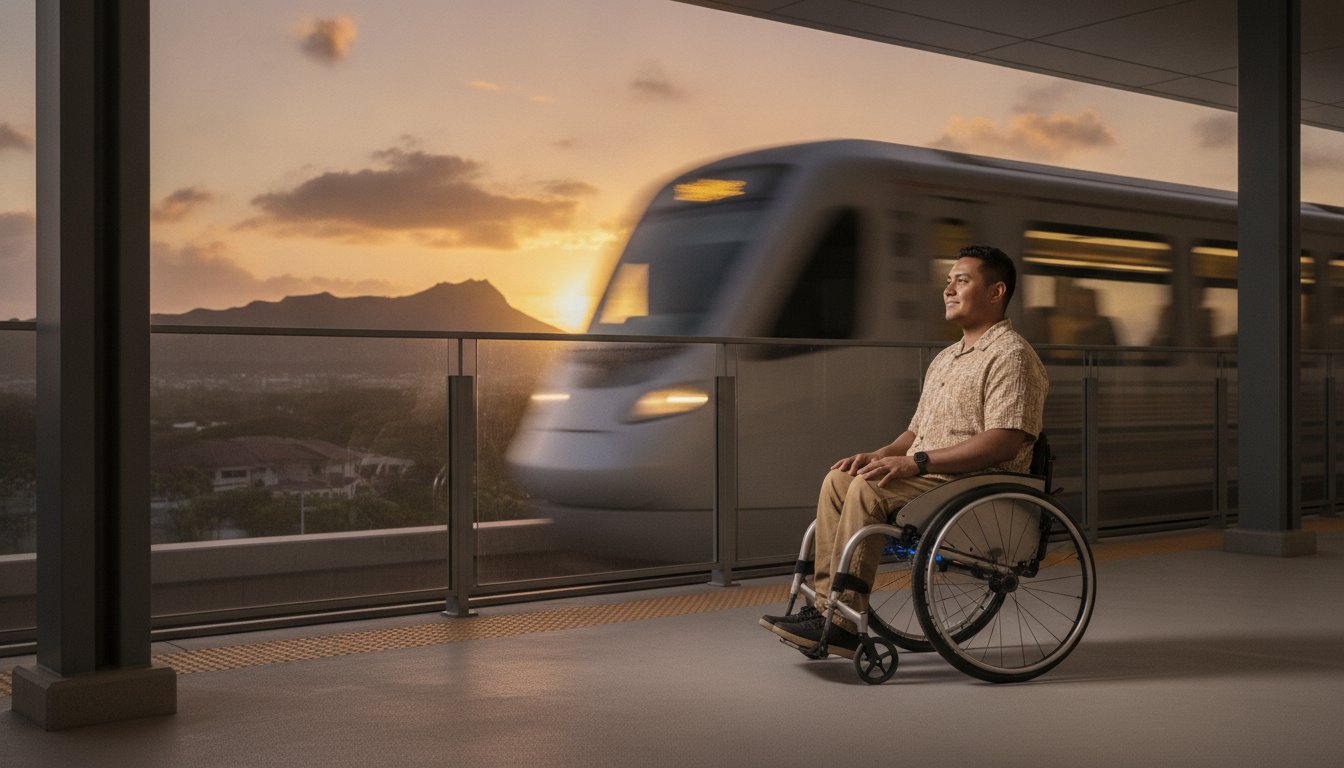
You might believe that exploring Oahu requires a specialized, high-priced ADA van rental for every mile of your trip, but the most efficient way to see the island is actually through a hybrid approach. We understand the anxiety that comes with planning a tropical getaway when mobility is a factor. The fear of getting stranded at a non-accessible stop or facing astronomical transportation fees can turn a dream vacation into a logistical headache. You deserve to focus on the sunset at Waikiki, not the mechanics of a boarding ramp.
This guide will show you how getting around honolulu in a wheelchair can be both seamless and affordable by combining the city's award-winning public transit with a smart, portable equipment strategy. You'll learn exactly how to master the logistics of the island's infrastructure, including the latest 2026 fare updates for TheBus and the fully accessible Skyline rail system. We'll provide a clear airport-to-hotel transport plan and show you how to use portable rentals to bridge transit gaps with confidence. From the sands of Ala Moana to the history of Pearl Harbor, your path across Oahu is about to become much clearer.
Honolulu has transformed into a global leader for inclusive travel. By 2026, the city has refined its infrastructure to ensure that physical limitations don't hinder the island experience. Whether you are staying in the bustling heart of Waikiki or exploring the residential growth in Ewa Beach, the H-1 corridor serves as a reliable lifeline connecting these hubs. Mastering the layout is the first step in successfully getting around honolulu in a wheelchair.
You have three main avenues for movement across the island. The public sector is the most prominent, featuring the extensive TheBus public transit system and the modern, elevated Skyline rail. Private options include specialized shuttles and standard rideshares that offer door-to-door service. Finally, paratransit services like the Handi-Van provide dedicated support for those who qualify and register in advance. Your choice between these pillars depends on your destination, your budget, and the specific equipment you use.
The geography of Oahu dictates much of your transit strategy. Waikiki is famously flat and highly navigable, making it ideal for manual chairs and scooters. As you move toward Ewa Beach or Kapolei, you'll encounter newer developments with wide, ADA-compliant paths and modern facilities. The H-1 freeway acts as the primary artery, but the method you choose to traverse it will define your daily rhythm. Public transit remains the most cost-effective way to see the sights, while private vans offer speed and privacy for a premium.
Federal and state laws mandate that all public carriers on Oahu provide functional ramp or lift access. In the Waikiki district, the city prioritizes sidewalk maintenance and curb cuts to ensure a smooth transition from hotel lobbies to the beach. You have the right to accessible boarding on every municipal vehicle, from the smallest bus to the Skyline trains. These standards are strictly enforced to maintain Honolulu's reputation as a welcoming destination. If you encounter a rare obstacle, local businesses are generally eager to assist, reflecting the island's spirit of hospitality.
Your choice of gear determines your level of independence. A portable mobility scooter rental in Honolulu changes the game for many travelers. These compact devices allow you to use standard vehicles or rideshares rather than waiting for specialized, high-cost vans. If you prefer municipal transit, remember that manual wheelchairs and power chairs must meet specific dimension standards to fit on bus lifts. Most municipal ramps are designed to handle up to 600 pounds, including the user and the device. Confirming your equipment's weight and width before you arrive ensures getting around honolulu in a wheelchair remains a stress-free experience.
Getting around honolulu in a wheelchair is made remarkably simple by the city's unified payment system. The HOLO card is your universal ticket. It works across all municipal transit modes, including the bus and the rail. You can load funds online or at local retailers. By 2026, the daily fare cap is set at $7.50. This means once you spend that amount, the rest of your day's travel is free. It's a cost-effective way to explore without worrying about rising transportation budgets.
The municipal fleet is a point of pride for the island. TheBus is 100% accessible, featuring low-floor technology and automated ramps on every vehicle. For those who require door-to-door assistance, the Handi-Van serves as the primary paratransit option. Visitors can use this service for up to 21 days within a year, though you must register in advance. These systems are monitored by the Disability and Communication Access Board to ensure they meet strict state accessibility standards.
Skyline, the island's elevated rail, offers a fast alternative for traversing the western side of Oahu. It connects the residential hubs to the stadium area, bypassing much of the H-1 traffic. If you're staying in the west, consider an ewa beach mobility scooter rental to reach the stations with ease. The rail system is designed for total independence, allowing you to move from the street to the train platform without encountering a single stair.
Boarding is straightforward. When the bus approaches, wait near the front of the stop so the driver can see you. They'll deploy a sturdy ramp that meets the curb. Once inside, you'll find designated zones with securement straps. Drivers are trained to assist with these restraints to ensure your safety during the ride. Popular routes for honolulu mobility for seniors include the lines serving Ala Moana Center and the base of Diamond Head. These stops are well-maintained and offer plenty of space for maneuvering.
The Skyline rail system represents the peak of modern transit design. Every station features high-speed elevators that are wide enough for large power chairs. The boarding process is "level," meaning the train floor aligns perfectly with the platform. You don't need to wait for a ramp to be deployed. Inside the cars, you'll find ample room and clear signage. Stations also provide accessible restrooms and emergency call buttons at a reachable height. If you find the walk to the station too long, using a portable mobility scooter can help you navigate those last few blocks efficiently.
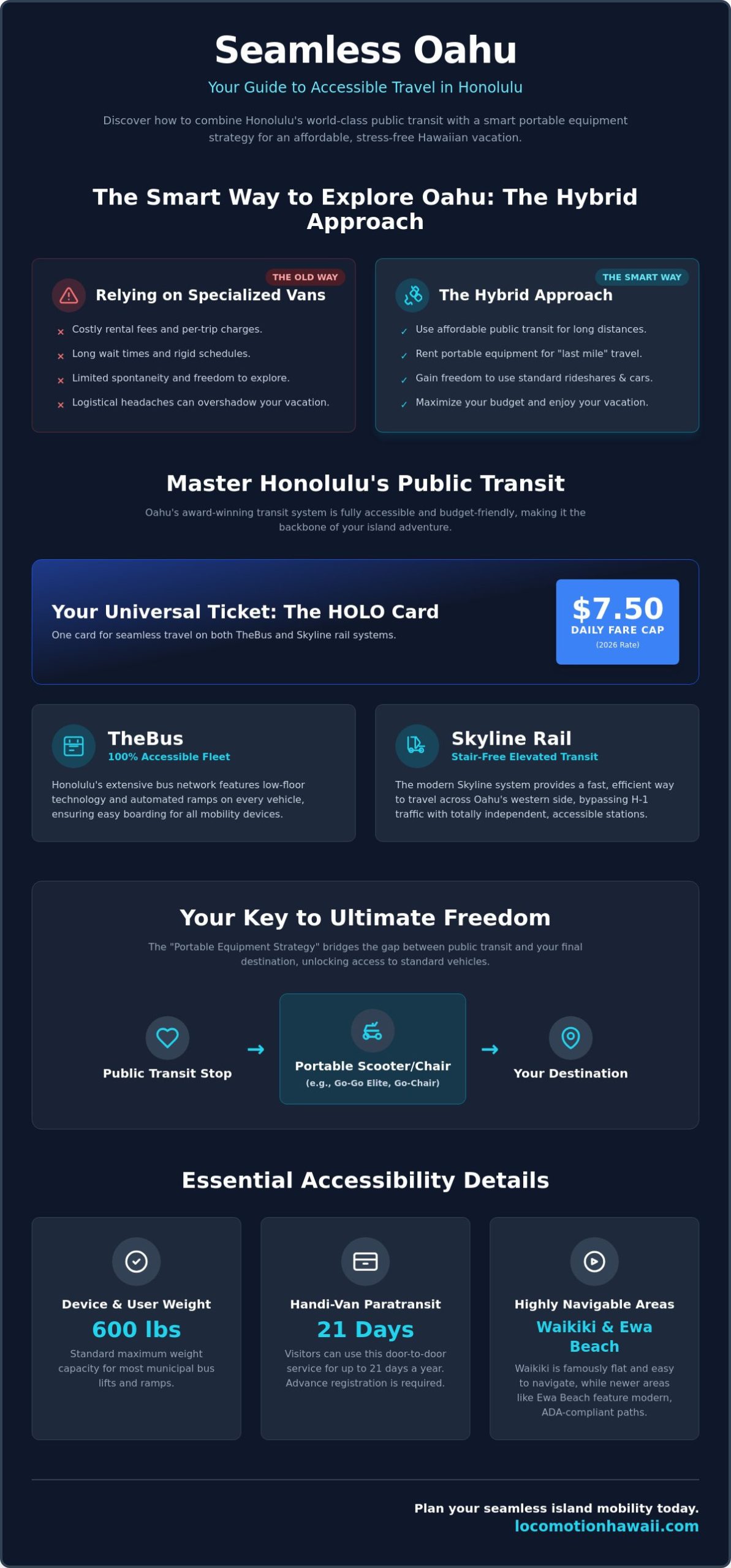
Many travelers assume they must rent a specialized Wheelchair Accessible Van (WAV) to navigate Oahu. While these vehicles offer excellent lift access, they often come with a premium price tag that can consume a large portion of your vacation budget. If you're getting around honolulu in a wheelchair, there's a more flexible alternative. We call it the "Portable Equipment Strategy." By choosing mobility gear that disassembles or folds, you can utilize standard rental cars or common rideshare services like Uber and Lyft. This approach grants you the freedom to choose any vehicle without being limited by the availability of specialized vans.
Requesting a WAV through rideshare apps in Honolulu is possible, but availability varies by time of day. Most major platforms now include a "WAV" option in their vehicle menu. If a dedicated accessible vehicle isn't available, the portable strategy ensures you're never stranded. A standard Uber XL or a rental SUV can easily accommodate a disassembled scooter or a folded manual chair in the trunk. For a deeper look at your rights and resources, the Hawaii State Guide for Travelers with Disabilities offers comprehensive state-level advice that helps you plan with confidence.
The Go-Go Elite Traveller is a game-changer for island exploration. It disassembles into five lightweight pieces, allowing it to fit into the trunk of almost any standard rental car. You don't need a vehicle with a heavy lift or ramp. This flexibility lets you choose a car that fits your style and budget. If you prefer a non-powered option, a transport chair rental waikiki provides a featherweight solution for quick trips to dinner or the shops. These chairs are designed for easy folding and can be tucked away in seconds. They're ideal for travelers who want to bridge the gap between their hotel and the nearest transit stop without the bulk of a full-sized electric model.
Navigating the airport is your first test when getting around honolulu in a wheelchair. At HNL, terminals 1 and 2 feature designated accessible pickup zones. These areas are clearly marked and offer enough space for loading equipment safely. We recommend coordinating with a honolulu airport mobility assistance rental service for curbside delivery. This allows you to have your scooter or chair waiting for you the moment you exit the terminal. If you're bringing your own chair, you can gate-check it and transition immediately to your local rental. This ensures your personal equipment stays safe while you enjoy the rugged reliability of our island-ready models during your stay.
Waikiki Beach Walk stands as a premier example of urban design that prioritizes accessibility. The terrain is notably flat, featuring wide sidewalks and smooth transitions that make getting around honolulu in a wheelchair feel effortless in this district. Similarly, the Ala Moana Center offers an expansive open-air shopping experience with clearly marked elevator banks and accessible paths connecting all three levels. While these areas are designed for ease, the sheer size of these locations can be taxing. Planning your route to include rest stops at the various accessible seating areas will help you maintain your energy throughout the day.
Exploring the island's history requires a bit more tactical preparation. Landmarks like the USS Arizona Memorial and the surrounding museums are fully compliant with federal standards, but they cover significant ground. The distance between the visitor center and the various memorial entrances can be surprising. To ensure you don't miss a single exhibit due to fatigue, our team can deliver a De-Bug Beach Wheelchair or a portable scooter directly to your resort to help you navigate these larger sites with ease.
The USS Arizona Memorial remains the most visited site on the island, and its accessibility features are excellent. The ferry boarding process is handled with care; crew members use dedicated ramps to ensure you can board the vessel safely. Once you arrive at the memorial structure, the entire area is level and easy to traverse. However, the wait times and the distance from the $7 parking lot to the theater can be considerable. We highly recommend that you rent scooter for pearl harbor tour access. This allows you to navigate the long walkways between the Pacific Fleet Submarine Museum and the Aviation Museum without physical strain. Accessible restrooms are conveniently located near the theater and the main visitor center entrance.
Touching the Pacific Ocean is a highlight of any Oahu trip, and Honolulu has made great strides in beach accessibility. You'll find "Mobi-Mats" at several key locations along Waikiki Beach. These blue, semi-rigid mats create a stable path across the sand, allowing you to roll much closer to the water's edge. For those who want to go further, lifeguard stations at Waikiki and Ala Moana Beach Park often provide free beach wheelchairs on a first-come, first-served basis. If you're looking for more secluded spots, consult our oahu beach access for wheelchairs guide for a list of shores featuring specialized ramps and all-terrain equipment. Transitioning from the concrete sidewalk to the sand is safest at designated access points where the curb is flush with the matting.
Choosing the right partner for your trip is just as vital as selecting the right hotel. Our team understands the subtle nuances of the island's geography better than anyone else. We know which equipment works best for the specific ramps in older Honolulu buildings and which models are light enough for a standard trunk in Ewa traffic. Getting around honolulu in a wheelchair becomes a secondary thought when you have a local expert who anticipates your needs before you even land at Daniel K. Inouye International Airport. We don't just provide gear; we facilitate your independence.
Our commitment to service is deeply rooted in the spirit of Aloha. Whether you are staying at a high-rise resort in Waikiki, a private residence in Ewa Beach, or arriving at the cruise ship terminal, we ensure your equipment is ready when you are. This level of dedicated care is especially reassuring for seniors and travelers who might feel stressed by the logistics of a tropical vacation. We provide the quiet competence and high-end service required to turn a challenging itinerary into a seamless journey. You deserve to explore Oahu with total confidence.
We curate our inventory specifically to support the portable strategy that makes island travel affordable. Our Go-Go Elite Traveller 3-Wheel and 4-Wheel models are the gold standard for active travelers. These scooters disassemble quickly into lightweight pieces, allowing them to fit into almost any standard car trunk without the need for a lift. For those who require a powered seat with a compact footprint, the Go-Chair Power Wheelchair offers exceptional maneuverability for navigating crowded restaurants and shops. If your needs are more straightforward, a daily wheelchair rental waikiki is the perfect solution for short strolls along the beach lagoons. We also offer the De-Bug Beach Wheelchair for those who want the ultimate sandy adventure without limitations.
Securing your mobility for your 2026 Hawaii travel is a straightforward and efficient process. Our online reservation system is designed for clarity, allowing you to select your equipment and specify your delivery details in a few clicks. We offer flexible rental terms that cater to your specific schedule, from brief weekend stays to multi-week island tours. Getting around honolulu in a wheelchair should be defined by the sights you see, not the obstacles you face. Book your mobility equipment today and ensure your Hawaiian getaway is as limitless as the Pacific horizon.
Navigating the Pacific's most iconic destination is no longer a logistical puzzle. By leveraging Honolulu's 100% accessible bus fleet and the modern Skyline rail, you can explore the island's beauty without the high costs of specialized van rentals. Implementing a portable equipment strategy is the most effective way of getting around honolulu in a wheelchair while maintaining the flexibility to use standard rideshares and rental cars. You have the plan; now you just need the right gear to bring it all together.
As a locally owned and operated family business, we take pride in facilitating your independence with boutique care. Our specialized inventory features transportable Go-Go scooters designed to fit into standard trunks, ensuring you're never limited by your vehicle choice. We offer direct delivery to Waikiki hotels and Daniel K. Inouye International Airport to make your arrival as smooth as possible. View Our Mobility Rental Equipment and Book Your Oahu Adventure today. We look forward to welcoming you to the islands and helping you discover everything Oahu has to offer with total confidence.
Yes, the public transit system is fully accessible. Every vehicle in TheBus fleet features low-floor entry or automated ramps. The new Skyline rail also provides level boarding at every station. These systems make getting around honolulu in a wheelchair much easier for travelers on a budget. You'll find designated securement areas on board where drivers assist with safety straps. It's a reliable way to reach major hubs like Ala Moana and Kapolei.
You can request a specialized ride through the Uber or Lyft apps by selecting the WAV (Wheelchair Accessible Vehicle) option. Availability varies depending on the time of day and your location on the island. For more certainty, you can pre-arrange a pickup with local taxi companies that maintain a fleet of lift-equipped minivans. These services are ideal for door-to-door transport when public transit isn't the most convenient choice for your schedule.
Yes, you can bring a rental mobility scooter on any municipal bus in Honolulu. The ramps are designed to support most standard models, including the Go-Go Elite Traveller series. Drivers will help you position the scooter in the designated area and ensure it's properly secured before the bus moves. Just keep in mind that the total weight of the user and the device shouldn't exceed the 600-pound limit for most transit ramps.
Yes, several private shuttle companies offer ADA-compliant vehicles for airport transfers. You should book these at least 24 hours in advance to guarantee a lift-equipped van is waiting for you. Another efficient option is to have a portable scooter delivered directly to the terminal curbside. This allows you to transition into a standard shuttle or rental car immediately, which is a key strategy for getting around honolulu in a wheelchair without delays.
Yes, Pearl Harbor National Memorial provides a limited number of manual wheelchairs for visitors on a first-come, first-served basis. However, these chairs aren't always available during peak hours and require a companion to push. Because the site covers a massive area with long walkways between memorials, many guests prefer to bring a Go-Go Sport 4-Wheel scooter. This ensures you have the independence to see the entire site without relying on the availability of loaner equipment.
Waikiki is the most accessible area for travelers due to its flat terrain and modern infrastructure. The Waikiki Beach Walk and Kalakaua Avenue feature wide, well-maintained sidewalks with frequent curb cuts. Most hotels in this district are fully ADA-compliant and situated within rolling distance of accessible shopping and dining. Staying in this central hub minimizes the need for long-distance transit and allows you to enjoy the island's hospitality with minimal physical effort.
Yes, we offer the De-Bug Beach Wheelchair, which is designed for navigating the sandy shores of Oahu. While these are larger than standard chairs, they are built for transport. You'll typically need a vehicle with a larger trunk or an SUV to move them between different beaches. These specialized chairs are essential for those who want to experience the waterline safely at popular spots like Ala Moana Beach Park or the lagoons in Ko Olina.
Rental costs vary based on the specific equipment you choose and how long you need it. We offer flexible terms for everything from a Go-Chair Power Wheelchair to a standard manual chair. Generally, longer rental periods provide a better daily value for your vacation budget. Because every traveler’s needs are unique, we recommend checking our current inventory online to find the best fit for your specific itinerary and mobility requirements during your 2026 stay.
Join the hundreds of satisfied customers who trust us for their mobility needs.
